Is Flour Vegan? Plain, Enriched, Bleached and Self-Rising Explained
Ordinary wheat flour is vegan: it is ground grain and nothing else. Enriched, bleached and self-rising flours are vegan too in practice, but here is exactly what is added and what to check on flour-based products.
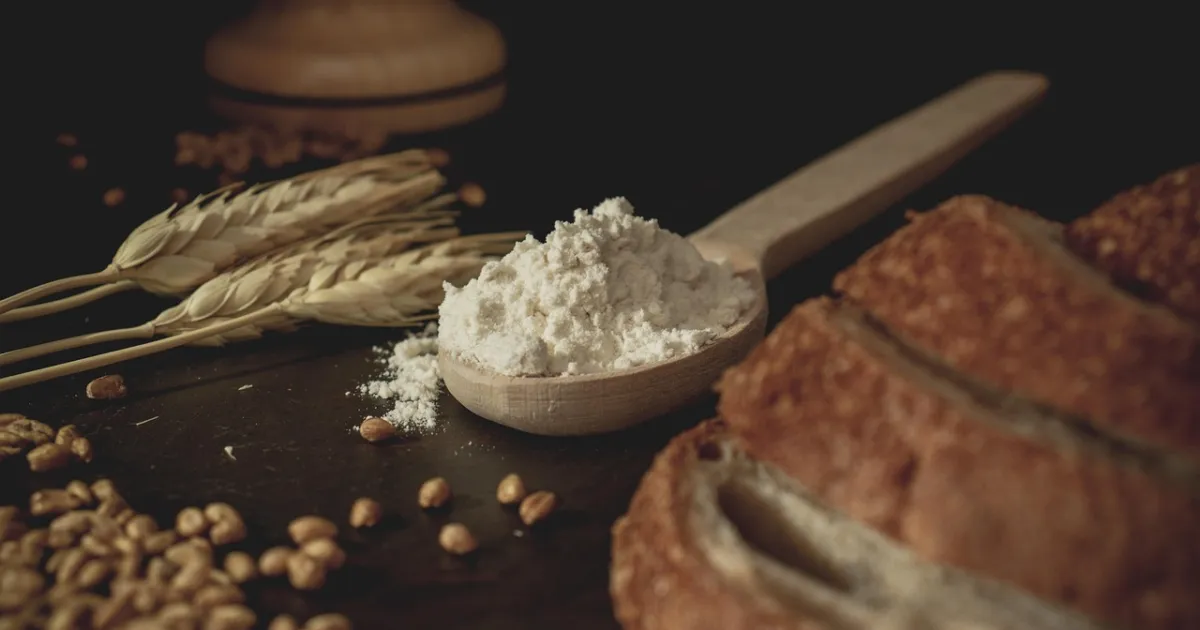
Yes, flour is vegan. Plain wheat flour is made by grinding wheat, and nothing from an animal goes into it. The same is true of whole wheat, bread, cake and pastry flours, and of flours made from other grains, nuts and legumes, such as rye, oat, rice, almond and chickpea flour.
The questions usually come up with flour labeled "enriched" or "bleached", or with self-rising flour, because the label lists extra ingredients. Below is what US rules allow in each type, and the flour-based products where animal ingredients really can appear.
Plain and whole wheat flour
In the United States, the contents of flour are set by federal standards of identity published in Title 21 of the Code of Federal Regulations. Plain white flour is defined in section 137.105 as a food made by grinding and bolting (sifting) cleaned wheat. Whole wheat flour, defined in section 137.200, keeps the bran and germ.
The optional ingredients these standards allow are all non-animal: a small amount of malted barley flour to correct the natural enzyme level of the wheat, ascorbic acid (vitamin C) as a dough conditioner, enzyme preparations from the mold Aspergillus oryzae, and bleaching agents. None of them comes from an animal.
Is bleached flour vegan?
Yes. Bleached flour is treated to whiten it and change how it bakes. The approved bleaching ingredients listed in the flour standard include chlorine, chlorine dioxide, benzoyl peroxide, oxides of nitrogen, acetone peroxides and azodicarbonamide. These are chemical treatments, not animal products, and any flour treated with them must carry the word "Bleached" next to its name on the label.
Some people prefer unbleached flour for other reasons, such as flavor or avoiding additives, but bleaching does not make flour non-vegan. Unlike some white cane sugar, flour is not filtered through bone char.
Is enriched flour vegan?
Yes. Enriched flour has vitamins and iron added back after milling. Under section 137.165, each pound must contain set amounts of thiamin, riboflavin, niacin, folic acid and iron, and calcium may be added as an option. These nutrients are produced industrially and are not taken from animals.
A point that sometimes worries vegans is vitamin D, because the common form, D3, is often made from lanolin from sheep's wool. The federal standard for enriched flour does not list vitamin D among its nutrients, so standard enriched flour does not contain it. If you ever see a fortified flour or flour mix that lists vitamin D3, check with the manufacturer about the source.
Is self-rising flour vegan?
Yes. Self-rising flour is flour mixed with baking powder and salt. Baking powder is a combination of baking soda, a powdered acid and a starch, all of which are vegan.
Which flour products can contain animal ingredients?
The flour itself is not the problem. The ingredients added to products made with flour are. Check the label on these:
- Baking mixes: cake, pancake, biscuit and muffin mixes often contain dried milk, buttermilk powder, whey or egg powder.
- Bread and rolls: many contain milk, butter, eggs or honey. See our guide to whether bread is vegan.
- Dough conditioners: L-cysteine is approved as a dough strengthener in yeast-raised baked goods and baking mixes. It can be made by fermentation, but the Vegetarian Resource Group reported that much of the supply has come from feathers or hair, and labels do not say which source was used.
- Pastry and pie dough: ready-made crusts and puff pastry may be made with butter or lard, though many are made with vegetable fats.
- Breadcrumbs and batters: these may include milk, egg or cheese.
The good news is that milk and eggs are major food allergens, so US labels must declare them, either in the ingredient list or in a "Contains" statement. That makes them easy to spot.
Choosing flour for vegan baking
Because eggs often add structure, flour choice matters a little more in vegan baking:
- All-purpose flour is the best default for cookies, muffins, quick breads and most cakes.
- Cake flour has less protein and gives a finer, softer crumb, which helps eggless layer cakes stay tender.
- Bread flour has more protein and builds strong gluten for chewy loaves, bagels and pizza.
- Whole wheat flour adds flavor and fiber but absorbs more liquid. Start by swapping it in for a quarter to a half of the white flour.
Measure flour by weight if you can, or spoon it into the cup and level it. Scooping straight from the bag packs in extra flour, and eggless bakes are less forgiving of a dry, heavy batter. For help with the other half of the equation, see our egg substitute guide.
What about gluten-free flour?
Gluten-free flours and blends, made from rice, sorghum, tapioca, potato starch or similar ingredients, are vegan too. Some blends include xanthan gum, which is produced by bacterial fermentation and is also vegan. Gluten-free and vegan baking together is harder, because you lose both gluten and egg for structure, so look for recipes written for that combination.
Questions
Is all-purpose flour vegan?
Yes. All-purpose flour is ground wheat, sometimes enriched with vitamins and iron or bleached. None of these ingredients comes from animals.
Is bleached flour vegan?
Yes. The bleaching agents allowed in US flour are chemical treatments, not animal products, and flour is not processed with bone char.
Does enriched flour contain vitamin D3 from lanolin?
Standard enriched flour does not. The US standard requires thiamin, riboflavin, niacin, folic acid and iron, with optional calcium, and does not include vitamin D.
Is self-rising flour vegan?
Yes. It is flour with baking powder and salt mixed in, all of which are vegan.
Is almond flour vegan?
Yes. Almond flour is finely ground blanched almonds. Like other nut, grain and legume flours, it is plant-based.