Vegan Chocolate Chip Cookies: Chewy, Golden and Egg-Free
These vegan chocolate chip cookies have crisp golden edges, chewy centers and pools of melted chocolate, and they need no egg substitute at all. The secret is the right fat, a little plant milk and a short rest in the fridge.
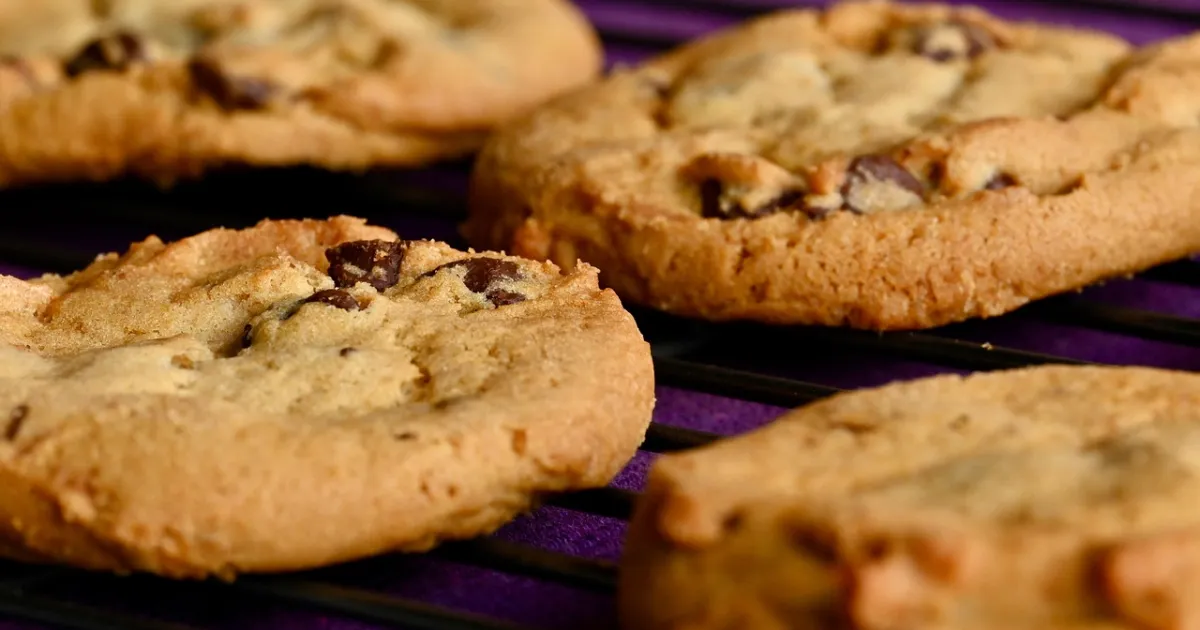
The best vegan chocolate chip cookies taste exactly like the classic: buttery, caramel-sweet from brown sugar, crisp at the edge and chewy in the middle. They do not need an egg replacer. In a cookie, the egg mainly adds moisture and a little binding, and a few tablespoons of plant milk with the right amount of brown sugar do that job well.
Ingredients
Makes about 18 cookies.
- ½ cup vegan butter sticks, softened but still cool (113 g)
- ½ cup packed light brown sugar (100 g)
- ¼ cup granulated sugar (50 g)
- 3 tablespoons unsweetened plant milk, such as soy or oat (45 ml)
- 1 teaspoon vanilla extract
- 1½ cups all-purpose flour (190 g)
- ½ teaspoon baking soda
- ½ teaspoon fine salt
- ¾ cup dairy-free chocolate chips or chopped dark chocolate (130 g)
- Flaky sea salt, for the tops (optional)
Method
- Cream. In a large bowl, beat the vegan butter, brown sugar and granulated sugar with a spatula or hand mixer for 1 to 2 minutes, until smooth and slightly lighter in color.
- Add the liquids. Beat in the plant milk and vanilla. The mixture may look a little split; it will come together with the flour.
- Add the dry ingredients. Add the flour, baking soda and salt and mix on low or by hand until just combined. Fold in the chocolate.
- Chill. Cover and refrigerate the dough for at least 30 minutes, or up to 3 days. This step matters more for vegan cookies than for most recipes: vegan butter softens quickly, and cold dough spreads less and bakes up thicker and chewier.
- Shape. Heat the oven to 350°F (175°C) and line two baking sheets with parchment. Scoop the dough into balls of about 2 tablespoons (35 g) and space them 2 inches apart.
- Bake. Bake one sheet at a time for 10 to 12 minutes, until the edges are golden and the centers still look slightly underdone. They firm up as they cool.
- Finish. Sprinkle with flaky salt if you like, and leave on the sheet for 5 minutes before moving them to a rack.
Keys to the best texture
Use stick vegan butter
Tub spreads have more water and liquid oil, which makes cookies spread into thin, greasy discs. Sticks or blocks behave much more like dairy butter. Our guide to vegan butter explains the difference and how to check fat content on the label.
More brown sugar for chew
Brown sugar holds moisture and gives chewiness and a toffee flavor. For an even chewier cookie, use ¾ cup brown sugar and no white sugar. For a crisper cookie, swap the ratio.
Measure the flour carefully
Too much flour gives dry, cakey cookies that do not spread at all. Weigh it if you can, or spoon it into the cup and level it.
Pull them early
Vegan cookies keep baking on the hot tray. Take them out while the centers still look soft.
Is chocolate vegan?
Pure chocolate is made from cocoa beans, which are plant-based. But milk chocolate contains milk by definition, and the US standard for sweet chocolate, which also covers semisweet and bittersweet, allows milk ingredients such as cream, butter or milk powder in small amounts. So a bag of semisweet chips is often vegan, but not always.
Milk is a major food allergen, so it must be declared on US labels. Look for chips with no milk in the ingredient list or "Contains" statement. Bars labeled dark chocolate with 70 percent cocoa or more are frequently dairy-free, but still check. Many chocolate makers also warn that products may contain traces of milk from shared equipment, which matters for allergies more than for most vegans.
Variations
- Brown butter flavor: vegan butter does not brown like dairy butter, but toasting the flour in a dry pan until it smells nutty, then cooling it, gives a similar depth.
- Double chocolate: replace ¼ cup of the flour with unsweetened cocoa powder and add 1 extra tablespoon of plant milk.
- Oatmeal chocolate chip: replace ½ cup of the flour with ¾ cup rolled oats.
- Nutty: fold in ½ cup toasted chopped walnuts or pecans with the chocolate.
- Giant cookies: shape 8 large balls and bake for 14 to 16 minutes.
Troubleshooting
- Flat cookies: the dough was too warm or the butter was a tub spread. Chill longer and use sticks.
- Cakey, puffy cookies: too much flour or overmixing after adding it.
- Pale cookies: bake a minute or two longer, or move the tray to the upper third of the oven.
- Hard the next day: store airtight with a slice of bread, which keeps them soft.
Storing and freezing
Keep baked cookies in an airtight container for up to 4 days. Freeze scoops of raw dough on a tray, then bag them; bake from frozen, adding 1 to 2 minutes. Fresh warm cookies whenever you want them are one of the best reasons to make a double batch.
Looking for a fruit-sweetened bake instead? Try our vegan banana bread.
Questions
Do vegan cookies need an egg substitute?
Not usually. In drop cookies like these, a few tablespoons of plant milk replace the moisture of the egg. A flax egg can be added for a slightly firmer, more cake-like cookie.
Why do I need to chill vegan cookie dough?
Vegan butter softens faster than dairy butter. Chilling firms the fat so the cookies spread less and stay thick and chewy.
Are semisweet chocolate chips vegan?
Often, but not always. US rules allow small amounts of milk ingredients in semisweet chocolate, so check the ingredient list and "Contains" statement.
Can I use coconut oil instead of vegan butter?
Yes, use about ⅓ cup of solid refined coconut oil and add an extra pinch of salt. The cookies will be a little crisper and less buttery.
Can I make the dough ahead?
Yes. It keeps for up to 3 days in the fridge, and the flavor improves. Raw dough balls can be frozen for up to 3 months.